Ume joins the team for the walk to Morioka, and she has questions. A lot of them. About the seeds, the demons, the powers, the mechanics of all of it. The team answers eagerly, then less eagerly, and then Kabocha snaps. Ume, unbothered, identifies something no one has quite named: Kabu's healing and turnip-head aren't quirks. They're abilities.
Kinoko appears to point them toward town. Ume asks, genuinely, why they trust him. Nobody has asked this before, and the question briefly hangs in the air before one of Kinoko's adorable mushroom minions trundles past and she loses the thread.
Menpaku is a square with a problem. Three noodle families, ramen, soba, udon, each occupy a corner. Their father sits on the fourth. A single Mikan tree stands at the center, and it's nearly finished. The patriarch has called a final competition to decide which of his children carries on the family name. The families have already stopped sharing their last Mikan slices with each other.
Ume assigns each team member to their least favorite noodle, no discussion, no vote, and sets them loose while she investigates the tree and the old man. When they reconvene, everyone has clearly learned something. Kabocha looks at Ume: 'Did you plan this all along?'
A mid-episode Taste of Rivalry tips the feud past strained into something darker: none of the families will share their last Mikan slices, and the tree loses more fruit than it has left to lose. Mugimichi-sama, the patriarch, keeps appearing at his window looking slightly less old than the last time anyone checked.
He gets visibly younger as the tree fails. One morning he comes out in chef's whites, dusts off the counter of the old restaurant, and starts cooking sakubei for the first time in decades. His children watch from their own corners. None of them has ever made it themselves. Every one of them is good enough. None of them has ever felt it.
The judging ceremony is where he finally erupts, transforming mid-competition into a glowing neon Mikan Demon as the tree gives up its last fruit and collapses behind him. The fight knocks a boulder loose from the cliff above the square, and it comes down directly on what's left of the tree. The three families watch it happen in silence.
The team holds back more than they need to. Past seeds have cost their hosts everything, and this man looks like he's already spent. When the fight ends and he goes down, he reverts to himself: old, human, on the ground, saying out loud for the first time what he never told his children directly. That he pushed them because he believed they could be great, not because he was ever disappointed in them. That the distance between the three corners of the square was never what he wanted.
What's left of his power goes into the ground through the old root system, and a new sapling cracks up through the broken boulder already bearing fruit. Everyone assumes the extraction cost him his life. It didn't. He's fine, and for the first time in years, so is the argument between him and his children: the kind that ends in laughter instead of silence.
Kabocha tells her noodle-family mentor, quietly, that she recognizes her own father in the old man. Hearing someone else's hard parent finally say the words out loud gives her something she hadn't realized she was still waiting for.
OPEN THE BEAT SHEET ▼
- 1Forest walk to Morioka: Ume peppers the team with questions about seeds, demons, powers, and everything in between. They answer eagerly at first. Then they tire. Kabocha snaps. Ume, completely unfazed, identifies Kabu's healing and turnip-head connection as real powers that nobody has named yet.
- 2Kinoko reappears at a fork in the road and points them toward Morioka. Ume asks, quite innocently, why they trust him. Nobody has asked this before. The moment sits there for a second. Then one of Kinoko's tiny adorable mushroom minions trundles past and she forgets the question entirely.
- 3Arrival in Menpaku: three noodle shops, three corners of the main square, one dying Mikan tree in the center. The patriarch's house sits on the fourth corner. He announces, from a chair he doesn't get up from, that he will judge a final competition before the tree gives out. The families have already stopped sharing their last Mikan slices.
- 4To stay unified and avoid bias, Ume assigns each team member to their least favorite noodle. No discussion. Kabu gets soba, Kabocha gets ramen, Matsu gets udon, or some version of this that maximizes discomfort. Ume circulates between all three families, checking on the tree, watching the patriarch. When the team reconvenes, each of them has clearly learned something unexpected. Kabocha looks at Ume: 'Did you plan this all along?' Ume smiles. She did.
- 5Taste of Rivalry: the mid-episode escalation. All three families refuse to share their last Mikan slices with each other. The feud deepens. The tree takes a visible turn for the worse. The town's mood sours past strained into something harder to walk back.
- 6TURNING POINT — The patriarch gets visibly younger as the tree loses fruit. He emerges from his house in chef's whites, dusts off the counter in the old restaurant, and starts cooking sakubei for the first time in decades. His children watch from their respective corners. None of them has ever made his noodle. Each always believed they weren't good enough to try.
- 7CRISIS — The judging ceremony erupts: the patriarch transforms mid-competition into a glowing neon Mikan Demon. The tree releases its final fruit and collapses. During the fight, the demon smashes a boulder off a nearby cliff. It crashes down directly onto the Mikan tree and crushes it. The three families watch in silence.
- 8TURNING POINT — The team hesitates. Past seeds have taken everything from the hosts who carried them, and this man looks fragile. They hold back from hitting too hard. They take hits they don't have to.
- 9TURNING POINT — As the battle ends, the patriarch reverts: human again, weakened, on the ground. He says what he never said out loud: that he pushed his children hard because he believed they were capable of greatness, not because he was disappointed. That dividing them was the last thing he ever wanted.
- 10He channels his remaining power through the roots: through the ground, through whatever's left of the old root system. A new Mikan sapling cracks up through the shattered boulder and immediately bears fruit. The families watch it happen. Everyone assumes he's dead. He's not. He's fine. No sacrifice this time. He and his children laugh, argue, and start the long work of becoming a family again.
- 11TURNING POINT — Alone with her noodle-family mentor, Kabocha admits she sees her own father in the old man. Hearing a hard parent finally say the words out loud gives her something she didn't know she was looking for.
SUPPORTING CASTMugimichi-sama · The Three Siblings (Ramen, Soba, Udon)▼
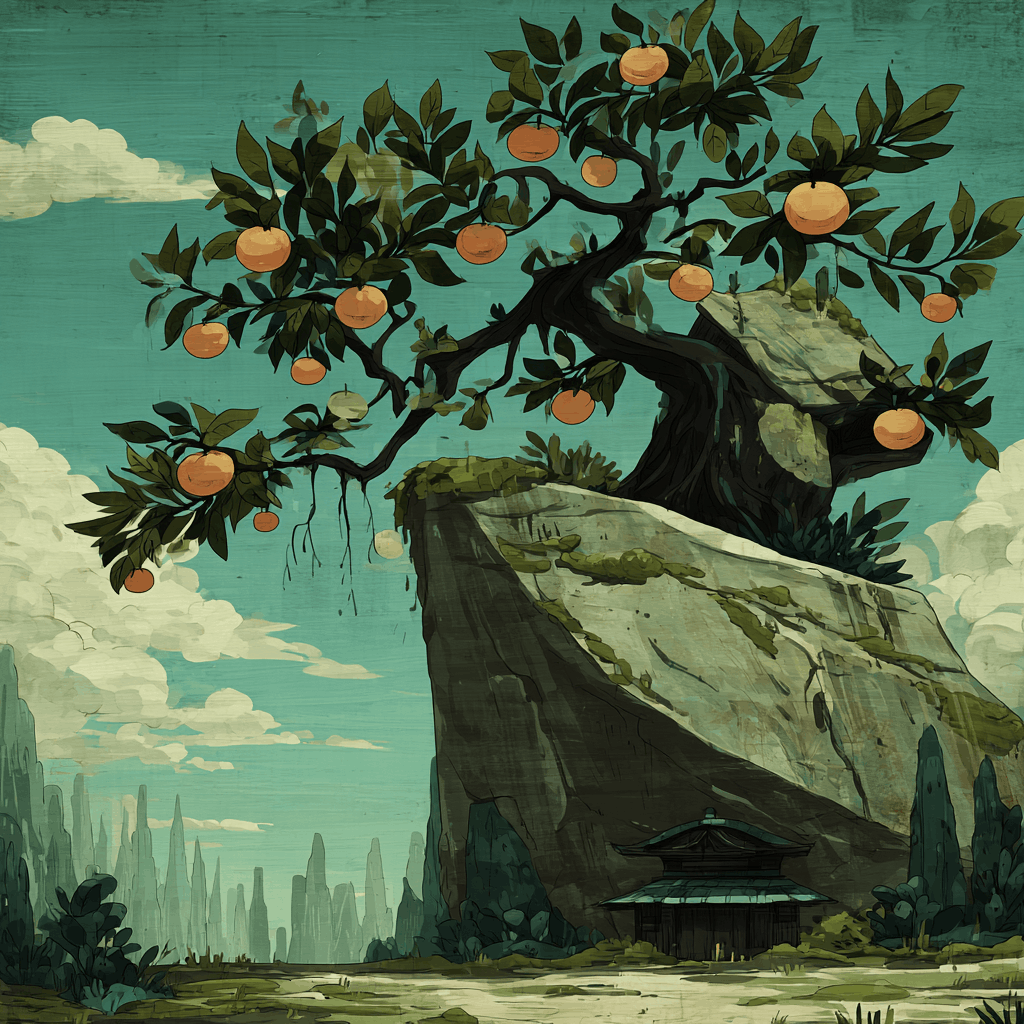
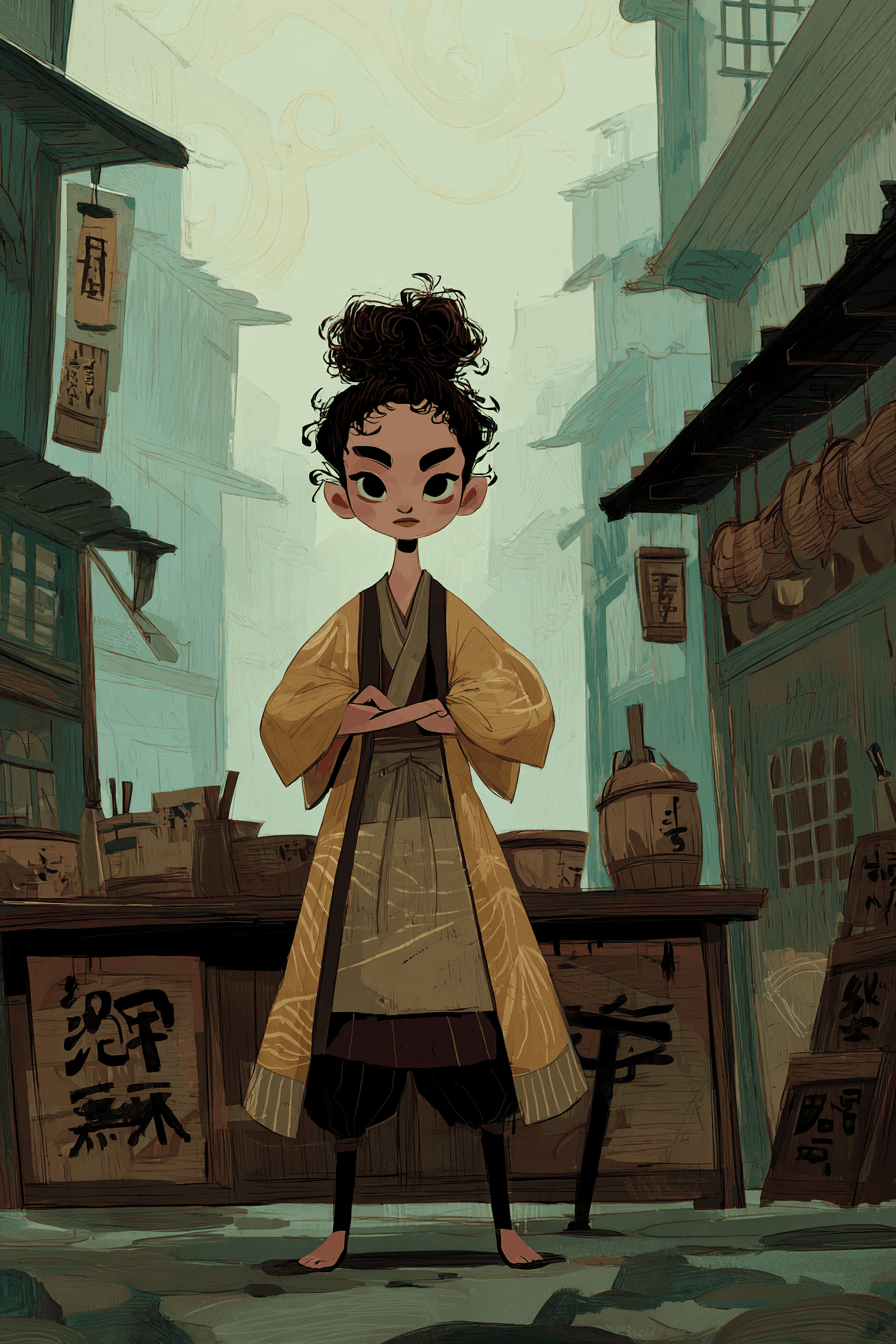
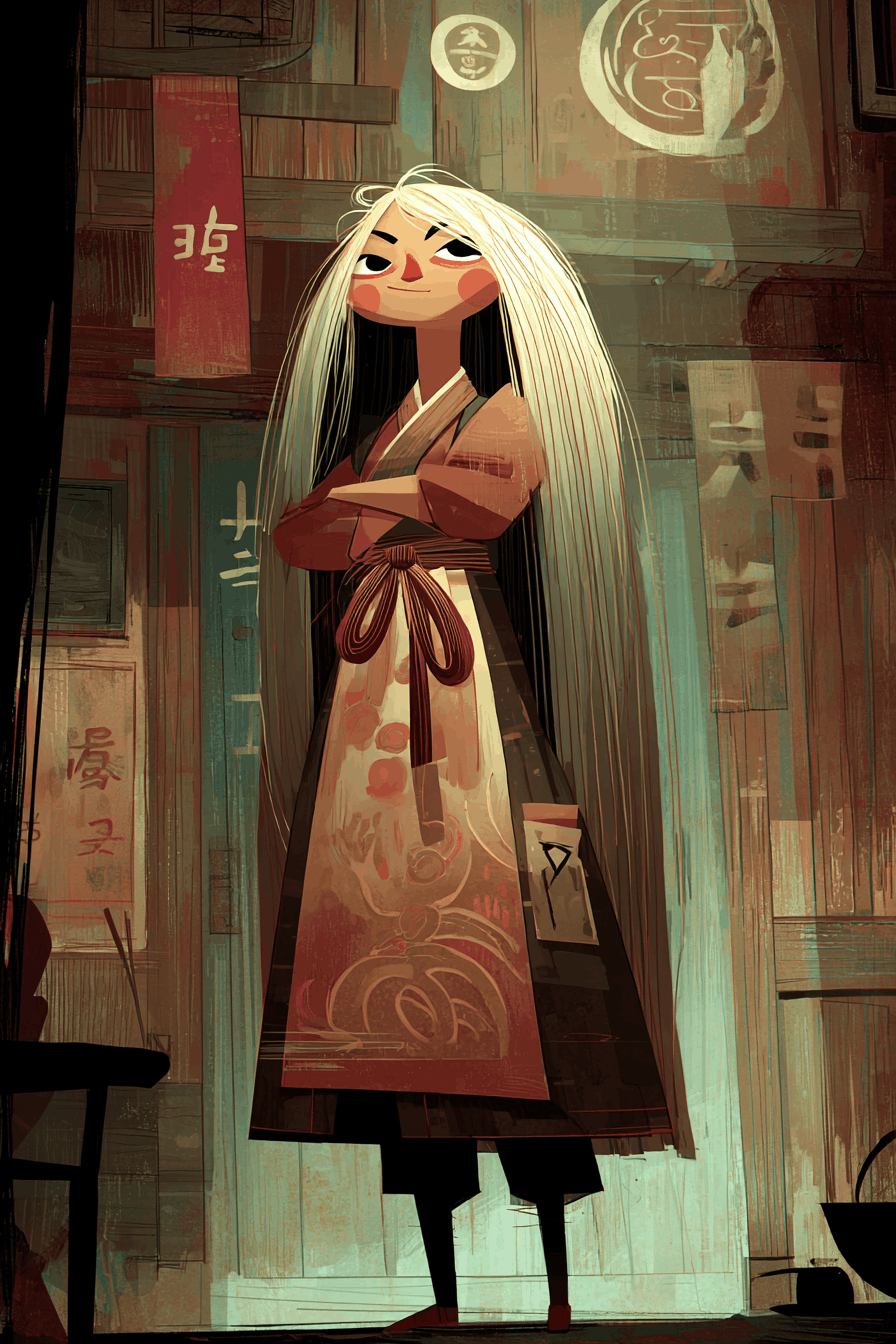
ART DIRECTION — A withered Mikan tree at the center of a noodle-steamed Morioka alleyway. Mugimichi-sama (pre-demon) stands before it, hands pressed to the bark. In the branches: faint glowing mandarins, each bearing the face of one of his children. Behind him, three noodle shop lanterns glow in rival colors.
Morioka has three noodle traditions: wanko soba, reimen, and jaja-men, each from a completely different country. Wanko soba is Japanese: buckwheat noodles served in an endless procession of small lacquer bowls, a server refilling each one the moment it's empty while chanting encouragement, until you cover your bowl with the lid to stop. Reimen came from Korea. In 1954, Teruto Aoki, a first-generation Korean from the northern part of the peninsula, opened a restaurant in Morioka and spent years adapting his childhood memory of cold noodles using Japanese ingredients, eventually landing on translucent potato-starch noodles in cold beef broth with kimchi. It didn't get the name 'Morioka reimen' until 1986. Jaja-men came from China: before World War II, a man named Kansho Takashina ate zhajiangmian in Manchuria and spent the years after the war recreating it back home in Morioka, substituting flat udon-style noodles for the original and adjusting the meat-miso sauce to local taste. All three dishes are now fiercely local. All three were invented somewhere else.
The city is also home to the Ishiwari Zakura, a cherry tree that has been growing through a granite boulder in front of the Morioka District Court for approximately 360 years. The popular story is that the tree split the rock. The more accurate version is that lightning cracked the boulder first, and a single cherry seed found the opening and took root. Either way, the tree and the stone have been inseparable for centuries, and the crack is still widening.