Cha-Obe is a tiered tea town: plantations at the mountain base, drying houses halfway up, merchant estates at the peak, and Lady Kussho sits at the top of all of it. Soft-spoken, generous with sweets, she has a problem: the tea trade has grown disorderly, and she needs people she can trust to restore it. Kabu, Kabocha, and Matsu arrive and are immediately, dangerously comfortable.
They run two jobs. The first puts the independent plantation owners into a consolidation agreement under Kussho's name. Kabu calls it helping. The second cracks the guarded drying houses: Matsu has been watching the guards rotate and knows the front post empties at 2:30. Both jobs go smoothly. Each time the team hesitates, Kussho produces something sweet and changes the subject.
Two jobs in, still no seed. The foreign traders at the port look suspicious enough to investigate. They speak Simlish. They're harmless. One Dutch merchant keeps trying to explain something about a gold strainer.
Kussho hands a sealed chest to her staff with instructions to lock it in the vault. Kabocha decides that's the next job, permission or not. Matsu wants proof before they move against her. Kabocha wants the seed. Kabu says nothing either way, and the disagreement doesn't resolve so much as get walked past.
Kabocha plans the break-in herself, splitting the job by what each of them does best: her stealth, Kabu's charm on the front staff, Matsu's memory of the patrol gaps he's been tracking since they arrived. It goes flawlessly. The vault holds paperwork, not a seed: names, abilities, hometowns, travel paths, a file on every member of the team, compiled since before they set foot in Cha-Obe. Kussho meets them there with a fresh tray of sweets and a soft question about what happens next.
She transforms mid-conversation: lush, overflowing, fighting with illusions of abundance that swarm the team in tea and sugar and comfort. Partway through, Kabocha runs out of shuriken and flings her hand out anyway. A pumpkin leaf, blade-sharp, flies from her palm and buries itself in the demon's bark. For one suspended moment the whole scene shifts to ink splash. She stares at her own hand like it belongs to someone else. Kabu extracts the cursed seed once the team stops fighting the illusion and starts fighting her.
The town surfaces around them, dazed. A grateful Dutch trader presses a solid gold tea strainer into Kabu's hands and explains its purpose at length, in Simlish, and the team nods along and understands none of it. Walking back down the mountain, Matsu says what he's been holding since the vault: whatever Kussho turned out to be, breaking into her home and taking what wasn't theirs was still wrong. Kabocha isn't interested in relitigating it. They freed a town. Kabu doesn't take a side. He just walks, the strainer clinking softly with every step.
Behind them, someone collects what Kussho left in that vault. The files change hands in the dark, to a shape in shadow or a crow, and nobody in Cha-Obe, or on the team, knows enough yet to ask who's holding them now.
OPEN THE BEAT SHEET ▼
- 1The team arrives in Cha-Obe to the smell of roasting tea and the sound of merchants arguing at the port in four languages. Lady Kussho receives them at her estate: glass windows, soft voice, sweets already on the table. She says the tea trade has grown chaotic and she needs people she can trust. The team is immediately, dangerously comfortable.
- 2Job 1, Plantations: Kabu frames the mission as charity. 'We're helping them become part of something better.' He negotiates the independent plantation owners into a consolidation agreement that legally absorbs their land under Kussho's estate. The team returns feeling useful. Kussho thanks them with candied ginger and doesn't mention that the plantations were the last piece of the supply chain she didn't already own.
- 3Job 2, Drying Houses: the team hits a wall at the guarded drying houses. Kabu tries charm. Kabocha tries bluffing. Neither works. Matsu, who has been standing quietly to one side watching the guards rotate, finally says: 'It's obvious. The front guard leaves for tea at 2:30. We walk in then.' They do. It's flawless. Kussho presents fruit jellies. 'Just one. But I won't tell anyone if you take two.'
- 4Still no seed. Kabocha starts to connect dots: Kussho is too poised, too prepared, and every job has ended with the supply chain a little more consolidated under her name. The team briefly convinces itself the foreign traders at the port are the source of the curse and investigates them. The traders speak Simlish, offer tea, and are entirely harmless. One Dutch merchant won't stop trying to explain something about a gold strainer. They nod and back away.
- 5TURNING POINT — Rising suspicion and fracture: Kabocha watches Kussho hand a sealed tea chest to her staff. 'Place this in the vault. It mustn't be tampered with.' Matsu says, 'We don't have proof she's the demon.' Kabocha says, 'We don't need proof. We need the seed.' Kabu hesitates. Doesn't object. The argument doesn't resolve so much as run out of air.
- 6Final heist, Kabocha's plan: she maps each of their strengths and assigns them without asking. Kabocha handles vines and stealth. Kabu charms and distracts the estate staff at the front. Matsu moves through the patrol gaps he's been mentally noting since they arrived. They reach the vault.
- 7TURNING POINT — Vault reveal: the chest is full of paperwork, not a seed. Names, abilities, hometowns, travel paths. Every member of the team, documented in detail. Kussho has been tracking them since before they showed up. She enters behind them with a fresh tray. 'Would you like something sweet before we discuss what happens next?'
- 8CRISIS — Battle: Kussho transforms, lush, overflowing, syrupy, fighting with illusions of abundance that swarm the team in tea and sugar and comfort. Kabocha runs out of pumpkin shuriken mid-fight. She flings her hand forward in desperation. A razor-sharp pumpkin leaf flies out and embeds itself in the demon's bark. The visual style shifts to ink splash animation for one suspended moment. Kabocha looks at her hand. Kabu watches her, impressed and quiet. The team regroups, stops indulging the demon's illusions, and Kabu extracts the cursed seed.
- 9Aftermath: the town begins to surface, dazed and blinking. The Dutch trader reappears and presses the Solid Gold Tea Strainer into Kabu's hands, explaining its magical properties at length in Simlish. The team stares. Nods. 'Ah. Yes. Of course. Thank you.' They walk away in silence. Matsu says it plainly: 'We broke into her home. Took what wasn't ours to take. Whatever she was, that part was still wrong.' Kabocha doesn't slow down. 'She was using us. Look around, we freed them.' Kabu opens his mouth. Closes it. The strainer clinks softly with each step.
- 10TURNING POINT — Final tag: Kussho's collected files on the team are passed to a figure in shadow, or to a crow. The recipient stays unseen.
SUPPORTING CASTLady Kusshō · Foreign Traders · Tea Foremen▼
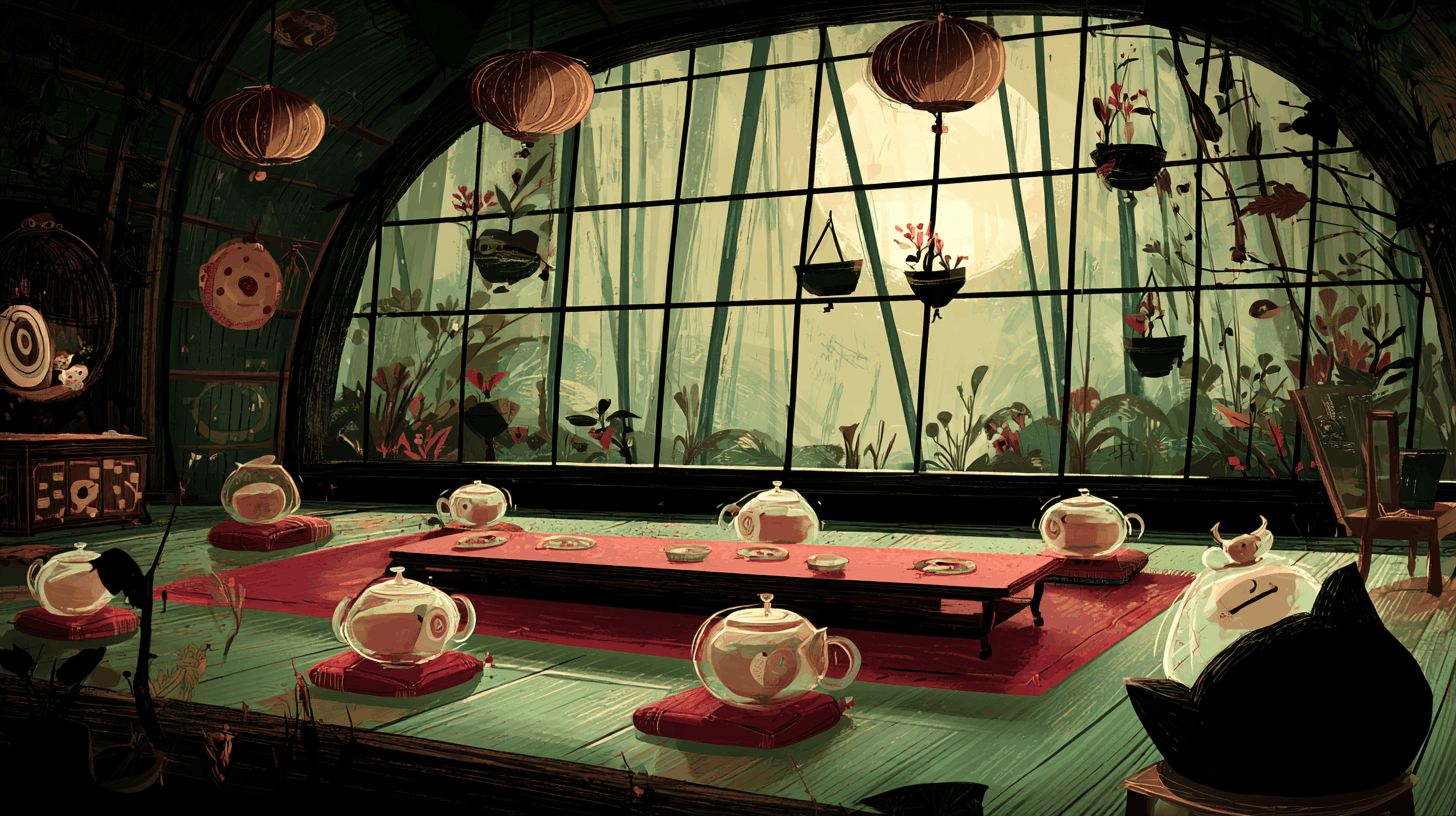
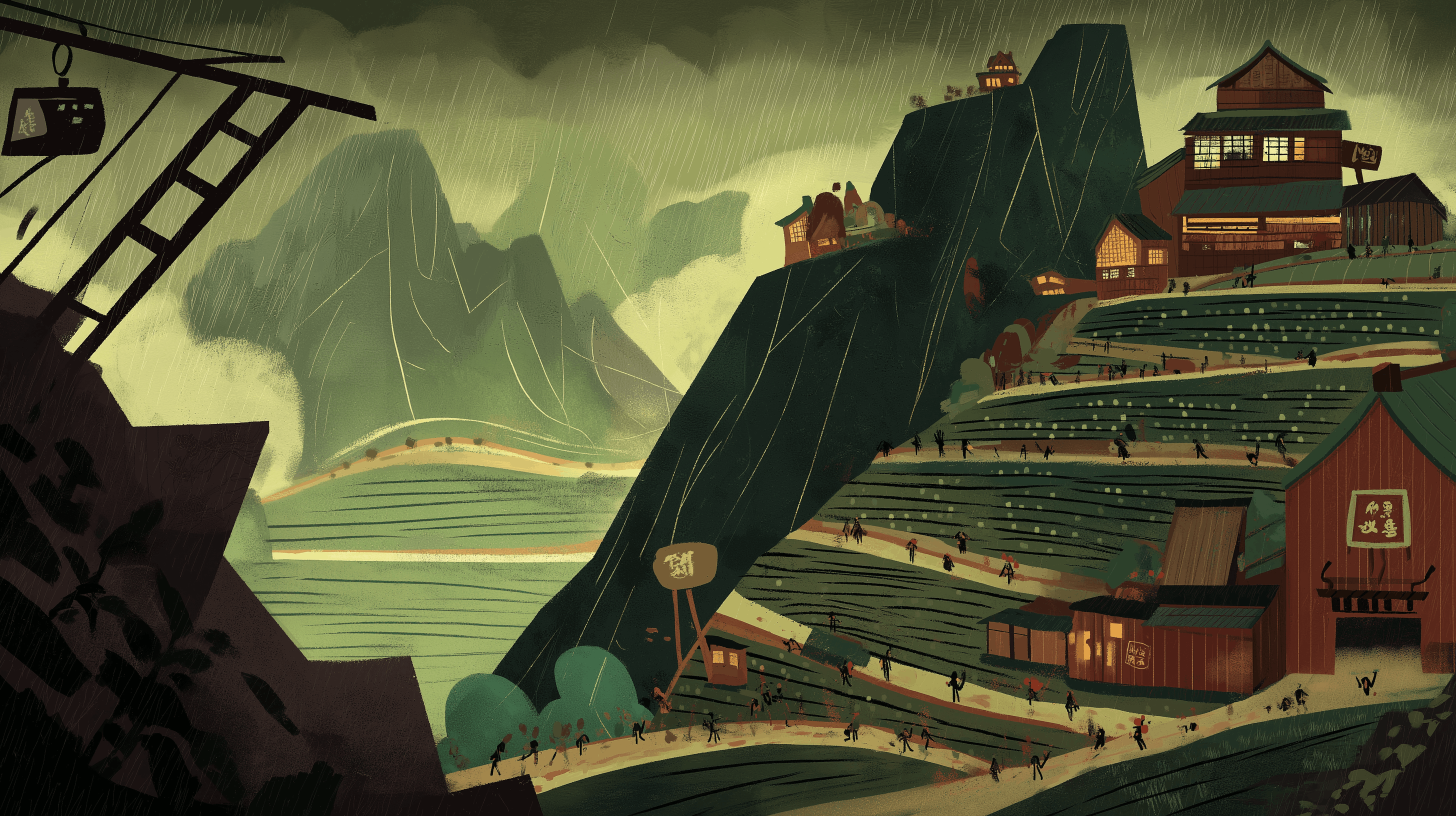
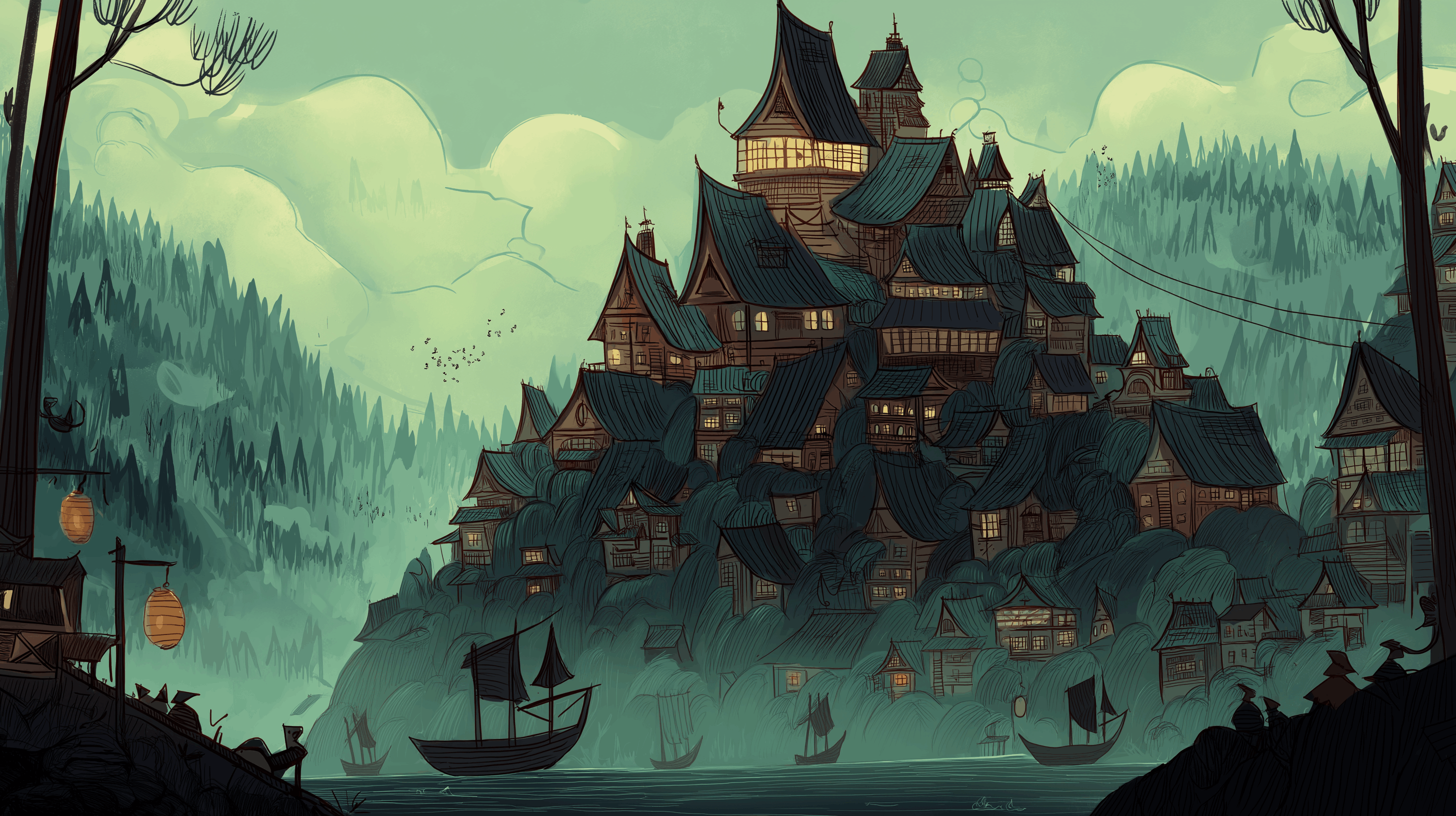
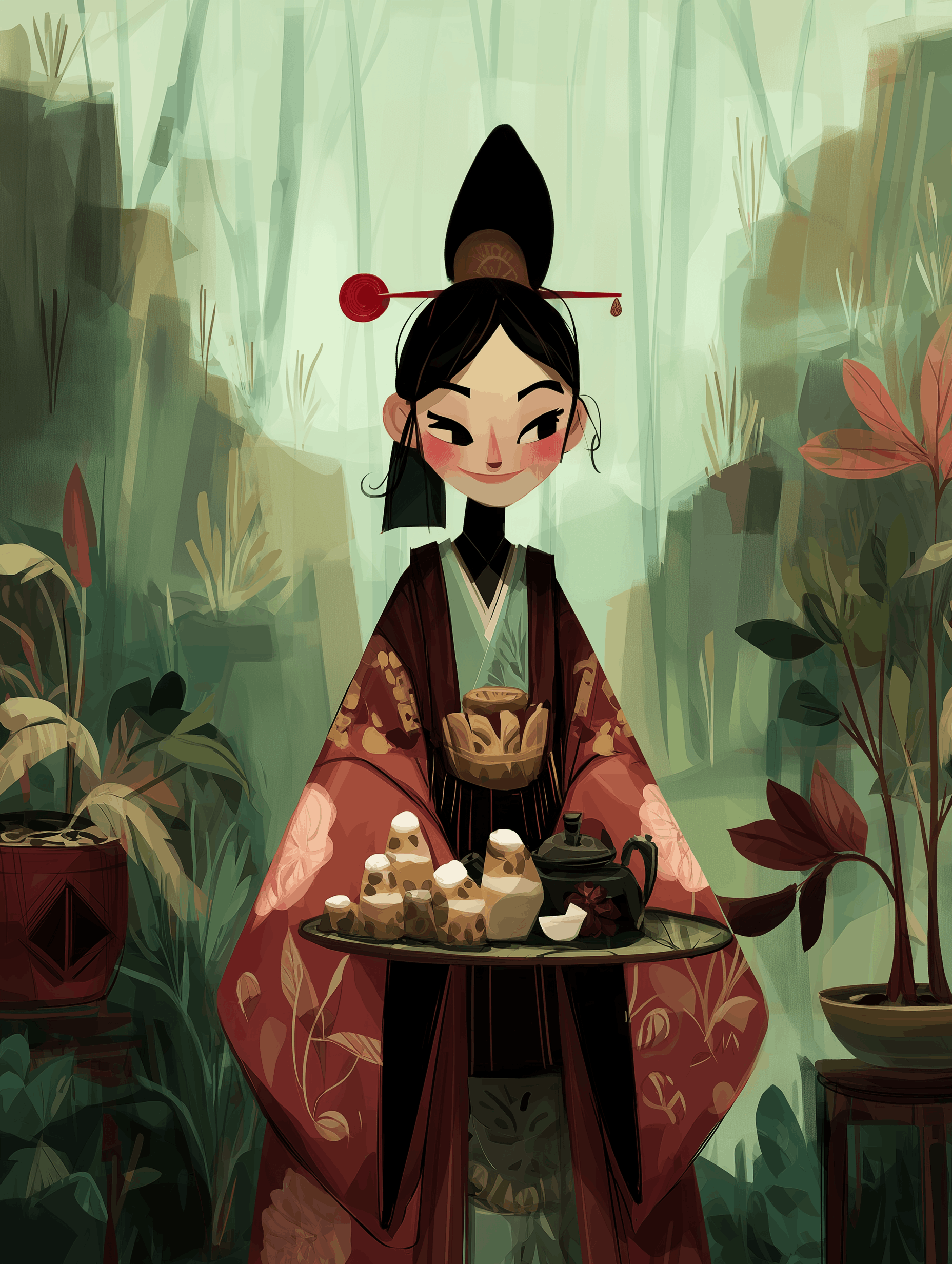
ART DIRECTION — Lady Kussho's tea hall: warm lantern light, spiraling matcha-green tea demon rising through the floor in the background. Kabu, Matsu, and Kabocha stand poised and ready in the foreground. Kabocha's hand glows faintly with the splinter, unnoticed, as she raises a pumpkin-leaf blade for the first time.
The Port of Kobe opened to foreign trade in 1868, and for a decade or so nobody could agree on what it was actually for. Yokohama had silk. Kobe tried silk too and mostly failed. Eventually it found its footing: assembling, processing, and selling Japanese green tea to North American buyers. British merchants organized most of it. They built godown warehouses and tea-firing facilities along the waterfront and employed large numbers of Japanese day laborers through the busy season. American demand drove the market; British capital ran the logistics. American merchants, strangely, were barely present in Kobe at all.
The geography did the social sorting. Chinese traders settled near the port in Nankinmachi. European merchants and diplomats climbed the slopes of Mt. Rokko, building their mansions in Kitano-cho with views over the harbor and, below it, everything they controlled. They processed the tea, set the distribution terms, and called that refinement. The people who grew the tea were further down the mountain.
There's a detail the Kobe histories tend to downplay: much of the green tea that left the port as 'authentic Japanese' had been re-fired and re-processed in the dockside warehouses, often by Chinese artisans using methods designed to match what Western buyers expected the tea to taste and look like. The product at the top of the chain was more constructed than it appeared. It usually is.