First stop without Kabocha, and it shows. Kabu, Matsu, and Ume reach Hakone wanting a rest and find a town in a panic: the dragon of Lake Ashi has 'risen,' boiling the springs and shaking the ground. Roku, the innkeeper, is sure the dragon is furious. Ume is sure it's geothermal activity. Nobody wants to hear from Ume.
Then Kabu's turnip healing leaks into the onsen, an old man throws away his cane mid-soak and thanks the dragon, and the whole village decides their guardian has returned in glory. Ume's corrections bounce off everyone. But when the team finally goes to the lake, what rises out of the boiling water isn't a dragon at all — it's a seaweed centipede, and it's tied to a cursed seed feeding on something the guilt-ridden Roku has been refusing to say out loud.
The episode keeps cutting away from Hakone to a lonelier story. Kabocha is out on the road by herself, the seed fragment in her hand turning every old doubt up to a roar — and she isn't alone for long. The Crow Witch has found her, and she speaks gently, reasonably, persuasively, about how fighters are better off trusting no one. Two problems, two lakes' worth of old legend, and one teammate drifting somewhere the others can't see. The centipede, at least, has a known solution. Kabocha is the part nobody's watching.
OPEN THE BEAT SHEET ▼
- 1Arrival in Shinkami: Kabu, Matsu, and Ume reach the ryokan wanting a rest. Roku explains the legend — the dragon of Lake Ashi turns destructive when it's been disrespected. Ume launches into magma and steam vents; the villagers talk straight over her about how to appease the dragon.
- 2Onsen comedy: Kabu's turnip regenerative energy leaks unnoticed into the bath. An old man rockets out of the water, flings his cane away, and yells 'Thank you, mighty dragon!' before dancing off. The whole village floods the onsen. Ume calls after them — 'It's not a dragon, it's Kabu!' — and is roundly ignored.
- 3TURNING POINT — Cutaway — Kabocha alone: on the road, the seed fragment amplifies every insecurity she's been swallowing. 'Why do I care what they think? I can do this alone.' Out of the shadows, in full tengu form but speaking with disarming gentleness, the Crow Witch arrives: 'You're a fighter, Kabocha. Fighters don't need anyone else. They only get in the way.'
- 4Lake investigation: guilt-ridden over years of neglecting the shrine, Roku begs the team to come to the lake. The water steams, the ground shakes, and Ume gets as far as 'Geothermal pressure, not drag—' before a massive seaweed centipede erupts from Lake Ashi. The villagers scatter, screaming to save the dragon.
- 5Tawara Toda connection: Ume reads the demon as a manifestation of Roku's guilt, amplified by a cursed seed in its chest and bleeding the lake's geothermal system dry. Kabu recognizes the centipede from a ukiyo-e panel in his comics — the Tawara Toda legend — where a hero killed a giant centipede with an arrow coated in spit.
- 6TURNING POINT — Cutaway — the Crow Witch's pitch: she lays out her philosophy, using her own history as the lesson. 'I trusted others once. All it earned me was chains. The only freedom comes from taking what's yours.' She works Kabocha's fear that the team never really trusted her. Kabocha, wavering: 'They always second-guess me. Maybe I am better off without them.' Crow Witch: 'Better? You're unstoppable.'
- 7The plan: Ume brews the Kabu-charged onsen water into a potion; Matsu sharpens an arrow; Kabu will draw the centipede in with his scythe. Kabu and Matsu argue strategy until Ume snaps — 'You can both fight it, or I'll do it myself' — and that's the end of the argument.
- 8The battle: Kabu charges, severing seaweed tendrils to pull the demon's focus. Matsu sets, Ume coats the arrow, and the demon rears back to expose the seed in its chest. Matsu fires; the potion spreads through the demon as it writhes; Kabu leaps onto its back and cuts the seed apart with his scythe. The centipede sloughs into harmless seaweed and the lake goes still.
- 9Resolution in Shinkami: Roku collapses in relief as the seed's hold fades and the geothermal activity settles. The villagers cheer that the dragon has been saved. Ume tries one last time to explain and a villager cuts her off — 'The dragon's spirit is happy now!' She gives up: 'Sometimes myths are true… just not in the way we expect.' Kabu looks at his ukiyo-e comic and says quietly, 'I wish she could've seen this.'
- 10CRISIS — Closing cutaway: with the Hakone fight won, the episode lands its real ending on the other thread. Kabocha, worn down and talked into it, accepts the Crow Witch's worldview. 'Better off without them.' She steps under the Crow Witch's wing and starts becoming something her friends won't recognize.
SUPPORTING CASTRoku · Ume▼
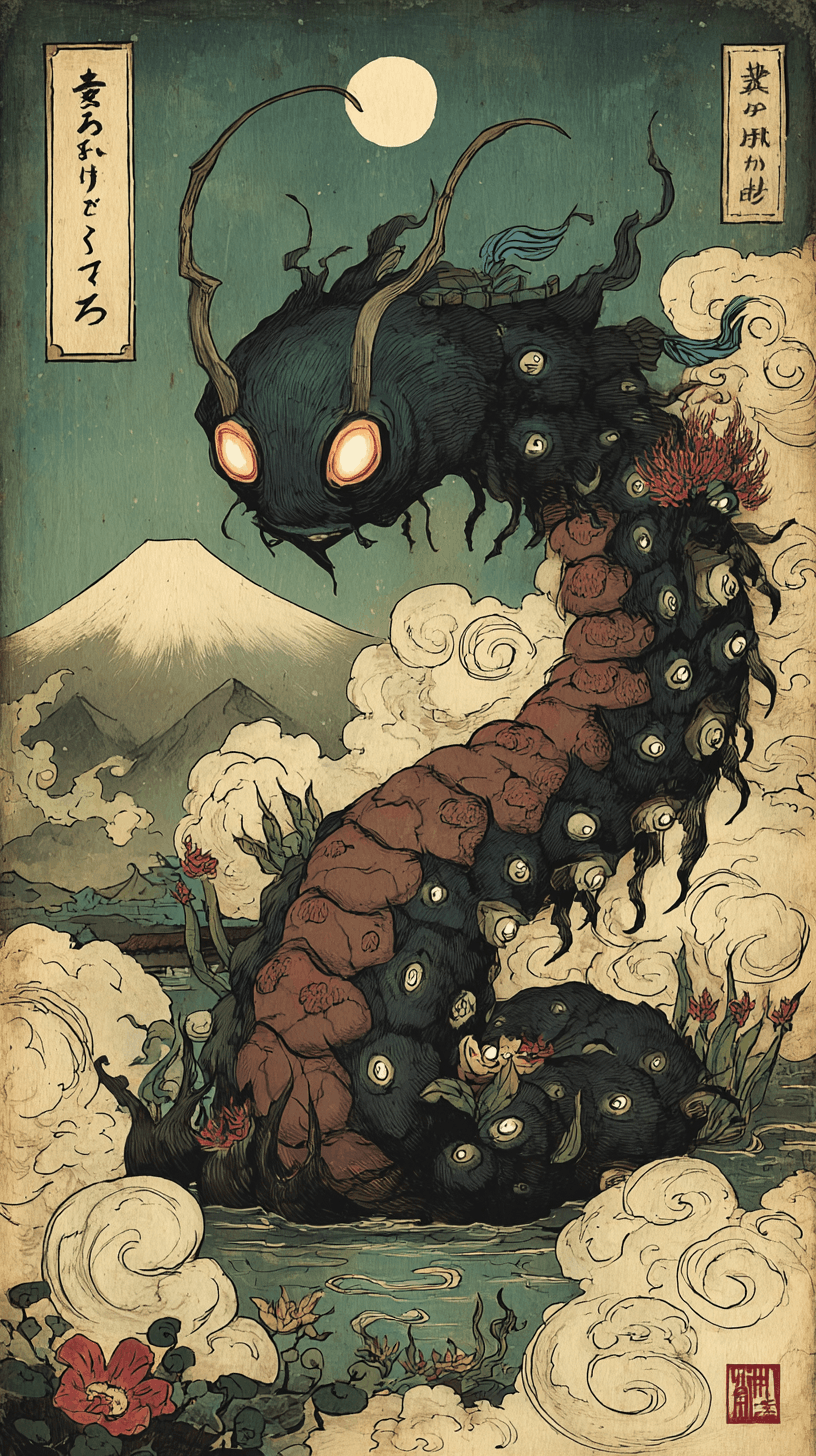
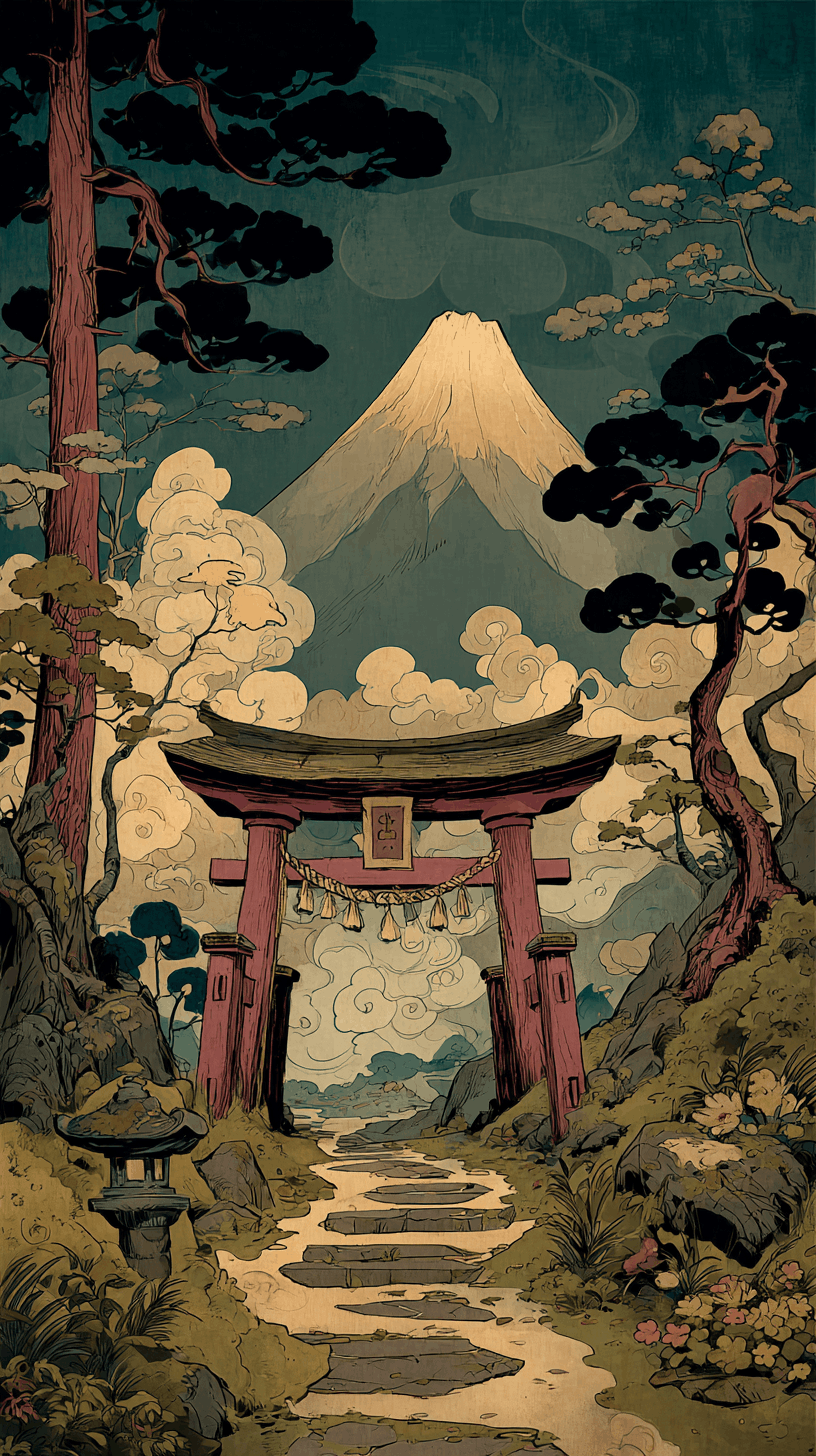
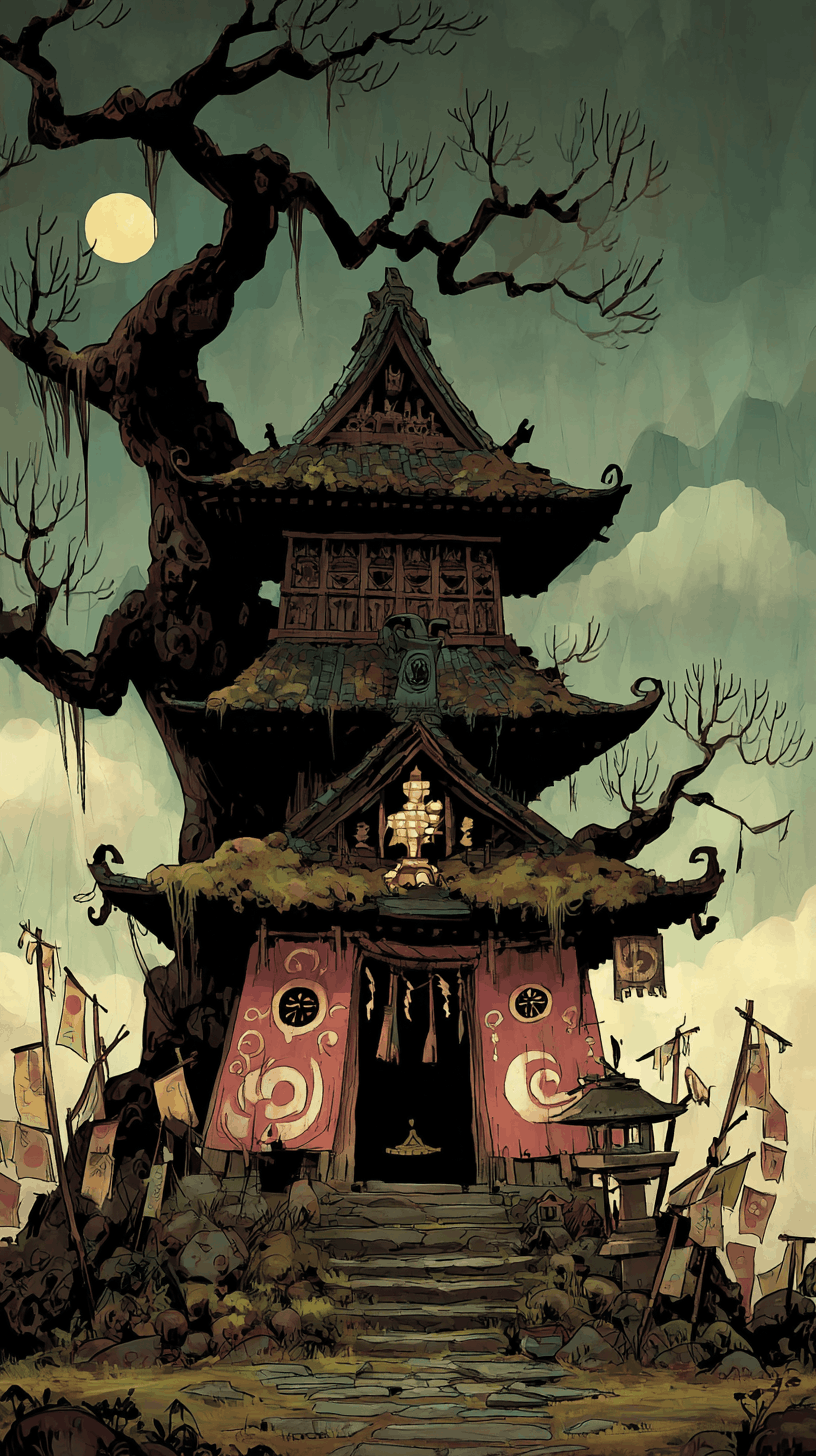
ART DIRECTION — Lake Ashi at dawn: Mt. Fuji visible in the fog beyond the caldera rim. The centipede demon rises from the lake's boiling center, silhouetted against early light. Kabu's arrow is mid-flight, trailing golden onsen-mist. In the bottom corner, a small panel shows Kabocha alone on a road, the crow's silhouette ahead of her.
Lake Ashi sits in a caldera — the flooded scar left when a volcano collapsed in on itself, here about 3,100 years ago. That's the reason for everything Hakone is known for. The hot springs, the steam vents, the occasional tremor, the way the ground sometimes reminds you what it's sitting on: all of it is the leftover plumbing of a volcano that isn't fully done. The lake rests around 723 meters up, and on a clear day Mt. Fuji shows up reflected on the surface, which is the postcard everyone comes for.
The people who lived here didn't have the word 'caldera.' What they had was a lake that boiled and shook, so they explained it with a dragon. Specifically the Kuzuryū, a nine-headed dragon said to have terrorized Lake Ashi — demanding the villagers give up their daughters — until a priest named Mangan subdued it in the year 757 and bound it into service as the lake's guardian deity. There's a shrine to it on the shore to this day, and a festival every month to keep it content. The dragon explanation and the geothermal explanation have been describing the same boiling water for thirteen centuries.
The area also sat on the Tokaido, the great feudal road between Edo and Kyoto, and the avenue of cedars planted for those travelers — some now five centuries old — still lines the mountain stretch. The separate Tawara Toda legend, from the Heian period, is set west of here at Lake Biwa: a warrior kills a giant centipede by coating his final arrow in his own saliva. Two lakes, two monsters, one very specific trick.